A well-designed garden room should not feel like a waiting area between house and garden. It should be the place you choose for a slow morning coffee, a long Sunday lunch, or the last conversation of the evening. Learning how to style garden rooms begins with that simple idea: give the space a proper purpose, then furnish it with the same care as any other room in your home.
The most successful schemes make the most of what makes a garden room special - generous daylight, views of changing greenery and a refreshing sense of separation from the main house. The aim is not to fill every corner. It is to create a room that feels settled, comfortable and naturally connected to the life beyond the glass.
How to style garden rooms around the way you live
Before choosing colours, cushions or furniture, decide what the room needs to do most often. A compact garden room may be a peaceful reading space for two. A larger orangery might need to work equally well for family lunches, weekend entertaining and quiet evenings. Those uses call for different layouts, and trying to accommodate every possibility can leave a room feeling unfocused.
Start with the principal seating area. In most garden rooms, this is best positioned to enjoy the view without making everyone feel as though they are sitting in a row facing outdoors. A pair of armchairs angled towards a sofa, or a sofa and two occasional chairs gathered around a low table, encourages conversation while keeping the garden in sight.
Allow room to move around the furniture comfortably, particularly near doors that open onto a patio or lawn. It is tempting to choose the largest sofa that will fit, but a little clear floor space makes a light-filled room feel calmer and more generous. If dining is part of the brief, give it its own zone rather than squeezing a table into the edge of a lounge arrangement.
Begin with natural materials and lasting comfort
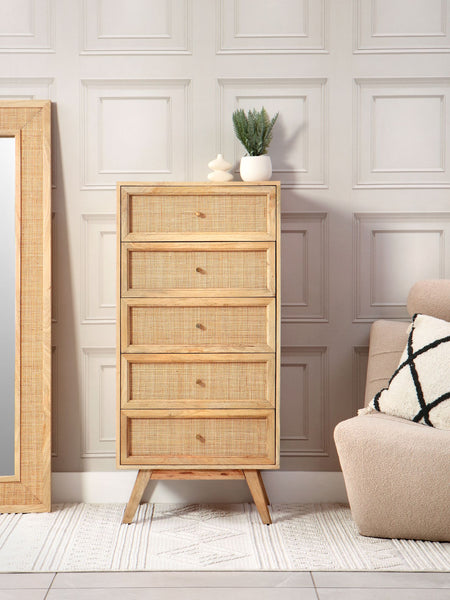
Garden rooms have an easy affinity with materials that carry warmth and texture. Natural rattan and cane bring a tactile, handcrafted quality that sits beautifully against glass, planting and painted timber. Their open weave also keeps the furniture visually light, which matters in rooms where the architecture and view should remain part of the composition.
Choose pieces with enough depth and support for the way you actually relax. Beautiful furniture that only works for a quick cup of tea will not make the room a favourite place to spend time. Deep, well-made cushions transform the experience, especially when they are tailored in fabrics that complement the room rather than compete with the garden outside.
Mango wood is a useful partner to rattan, whether in a coffee table, side table or substantial storage piece. Its grounded grain gives an airy room some visual weight. A small amount of timber often goes further than a room full of matching furniture, so let the materials vary naturally while repeating a few key tones.
Natural furniture is best suited to a protected, enclosed garden room rather than exposure to rain and persistent damp. If your space becomes very warm in summer or cool in winter, consider ventilation, roof blinds and a consistent heating approach. Looking after the environment around the furniture is part of looking after the furniture itself.
Build a palette that belongs to the garden
The view is already a significant part of the colour scheme. Rather than trying to match every shade of leaf and flower, take your lead from the quieter colours that endure throughout the year: warm stone, soft putty, oatmeal, moss, clay and muted blue-grey. These tones give a room a composed base, while allowing seasonal planting and changing light to bring the livelier notes.
For upholstery, a neutral main fabric is often the most flexible choice. It gives you freedom to change a few cushions, a throw or a rug as the seasons shift. In a north-facing room, warmer neutrals and gentle earthy colours can counteract cooler daylight. South-facing rooms can carry deeper greens, tobacco shades or inky blue with confidence, provided there is enough pale texture to keep the scheme from feeling heavy.
Avoid treating every item as an accent. One patterned fabric, perhaps echoed in a cushion or a footstool, is usually enough to give the arrangement character. The rest of the room can be quieter: linen-look fabrics, woven surfaces, ceramics and natural fibres offer interest without visual noise.
Use textiles to make the room feel inhabited
Glass and hard flooring can make even a beautifully furnished garden room sound slightly bare. A generously sized rug softens the acoustics and defines the seating area, particularly in an open-plan extension. Select a rug large enough for at least the front legs of the seating to sit on it. A small rug floating in the middle of the floor tends to make the furniture appear disconnected.
Layer in cushions with different textures rather than choosing every one from the same range. A woven cushion, a softer plain fabric and a subtle botanical print can feel collected over time. Keep a lightweight throw close by for cooler evenings, even in a well-insulated room. It is a modest addition, but it makes the room feel ready to use rather than merely dressed.
Treat lighting as part of the furniture plan
Daylight may be the reason you built the room, but it is evening lighting that determines whether you continue using it after sunset. A single ceiling fitting can leave faces in shadow and create harsh reflections in glazing. A layered approach is more comfortable.
Begin with ambient light, such as a dimmable ceiling fitting or discreet wall lights. Add a floor lamp beside an armchair for reading and a table lamp on a console or side table to create a softer pool of light at seated level. The combination brings depth to the room and makes the transition from garden to interior feel more inviting.
Choose warm-toned bulbs rather than a stark white light. If the room opens directly onto the garden, consider lighting the immediate terrace or a key tree beyond it. The point is not to flood the garden with brightness, but to preserve a sense of depth outside the glass once daylight fades.
Add storage, but keep it purposeful
Garden rooms can quickly gather the things that have no obvious home elsewhere: gardening books, children’s games, outdoor cushions, throws and spare tableware. A well-chosen sideboard, cabinet or storage bench prevents that gradual clutter from undermining the room’s restful quality.
Use open shelving sparingly. A few books, a bowl, framed photographs and a trailing plant give a room personality, but every surface does not need decoration. In a space with strong views, restraint is not a lack of style. It is what allows the eye to rest.
Plants can help bridge indoors and out, especially where the garden is still establishing. Choose specimens that suit the room’s light levels and place them at different heights - a larger floor plant, something sculptural on a side table and perhaps a smaller grouping near a window. Leave enough space for each to be noticed; a crowded collection can make a room feel more like a potting area than a living space.
Let the room change with the year
A garden room earns its place when it remains appealing in January as well as June. In colder months, bring in richer cushions, a heavier throw and the warm glow of lamps. When spring arrives, simplify the layers and let the first signs of the garden take more of the attention. Summer may call for lighter fabrics and doors opened wide, while autumn suits deeper texture and a more generous arrangement of candles or lanterns used safely indoors.
The furniture itself should provide continuity. Desser Furniture has spent more than a century working with natural rattan because it has the rare ability to feel relaxed without being temporary - equally at home in a bright conservatory, an orangery or a contemporary garden room. That sense of permanence gives you the freedom to refresh the details without repeatedly rethinking the whole space.
A garden room does not need to look styled for a photograph every day. It should look ready for real life: a book left on the arm of a chair, a tray for cups within reach, cushions that invite you to sit down. When comfort, proportion and natural materials are doing their job, the room will feel considered long before you add the finishing touches.