A small conservatory often becomes the room that almost works. It has wonderful light, a view of the garden and a sense of calm that the rest of the house may not, yet it can easily end up too hot, too bare or simply awkward to furnish. The best small conservatory makeover ideas begin with that reality. This is not about forcing a compact space to do everything, but about helping it do one or two things beautifully.
When a conservatory is modest in size, every choice carries more weight. The chair that is slightly too deep, the table that blocks the route to the garden, the fabric that looks flat in bright daylight - all of it is more noticeable. A successful makeover comes from restraint, proportion and materials that suit a light-filled room.
Start with how the room should feel
Before choosing furniture or paint, decide what the conservatory is for now. A reading room needs a different balance from a space used for morning coffee, occasional dining or evening drinks with friends. Many smaller conservatories struggle because they are asked to be a second sitting room, a plant room, a hallway and a storage area all at once.
Pick a main purpose, then let everything else support it. If the aim is relaxed everyday seating, focus on comfort and easy movement. If it is a garden-facing retreat, keep the layout open and uncluttered so the view remains part of the room. This sounds simple, but it is often the difference between a conservatory that feels considered and one that feels like overspill from elsewhere in the house.
Small conservatory makeover ideas that fix the layout first
In compact rooms, layout is more important than decoration. People often begin with accessories when the real problem is scale. A large sofa pushed against glazing can make the whole room feel boxed in, while several small, unrelated pieces can leave it looking fussy.
A pair of well-proportioned chairs with a compact coffee table often works better than trying to squeeze in full lounge seating. This gives the room shape without closing it down. In square conservatories, placing seating at an angle can soften the boxy feel. In long, narrow spaces, keep furniture parallel to the longest side so the room feels calmer and easier to move through.
Air around furniture matters. Even a few extra inches can make a small conservatory feel noticeably more generous. If there is a route to patio doors or the garden, protect it. A room that is easy to walk through will always feel larger than one filled to the edges.
Choose furniture with a lighter visual footprint
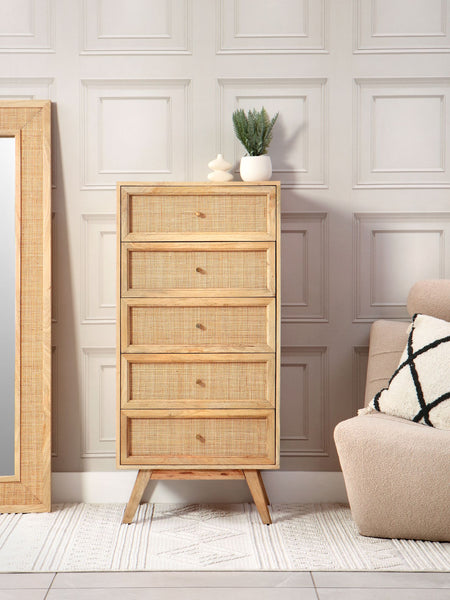
This is where natural materials come into their own. Furniture in natural rattan or cane brings texture and warmth without the heaviness of solid, blocky forms. In a conservatory, that matters. Light can pass around and through woven frames in a way that keeps the room feeling open.
There is also a practical side to this choice. Conservatories and garden rooms have changing temperatures and strong daylight, so materials need to feel at home in that environment. Natural rattan has a softness and character that sits comfortably in these spaces, particularly when paired with well-made cushions and a restrained palette.
If you are remaking the room from scratch, two armchairs, a loveseat or a neat corner arrangement can be enough. The temptation is often to buy more seating than the room needs. In truth, a smaller conservatory usually feels more luxurious when it has less in it, not more.
Use colour to soften the light, not compete with it
Bright rooms can make colour behave differently. What seems subtle in a standard sitting room may feel stark in a conservatory by midday. For that reason, gentle neutrals, chalky greens, soft stone shades and warm off-whites tend to work well. They calm the daylight rather than fighting it.
This does not mean the room must be bland. Small doses of deeper colour can give it shape - through cushions, a painted side table or a patterned footstool. Botanical prints and natural textures also sit comfortably here, though scale matters. In a compact room, one larger pattern often looks more elegant than lots of competing small ones.
Flooring can do a great deal of visual work. If the current floor feels cold or dated, a generous rug can change the atmosphere quickly. Choose one large enough to anchor the seating rather than a small rug floating in the centre. A room tends to look more finished when the rug is slightly larger than expected.
Bring in storage without making the room feel busy
One of the most useful small conservatory makeover ideas is to give everyday items a proper home. Throws, gardening books, candles, seed packets, children's bits and the occasional pair of shoes all have a way of drifting into this room. Without storage, even a lovely conservatory can start to feel temporary.
The answer is not bulky cabinetry. In most smaller spaces, a side table with a shelf, a storage bench or a neat console can be enough. Closed storage keeps the room calmer, while a small amount of open shelving can work if what is on display is intentional.
If the conservatory is part of a kitchen extension or sits between house and garden, storage becomes even more valuable. In that case, think about what genuinely belongs there and choose one piece that does that job properly instead of several that do it badly.
Window dressings change more than appearance
Conservatories are ruled by light and temperature, so window treatments are not just decorative. They can make the room more comfortable and more usable across the day. Blinds, lined curtains or carefully chosen shades can soften glare, add privacy and help the room feel furnished rather than exposed.
The right option depends on orientation and use. South-facing rooms may need more control over sunlight, while a garden-facing conservatory overlooked by neighbours may benefit from softer screening. Whatever you choose, keep the look tailored. Heavy, overly formal treatments can feel at odds with the easy character most people want from a conservatory.
Layer comfort so the room gets used all year
A conservatory makeover should not stop at appearances. The real test is whether you want to sit there in April, August and late October. Comfort comes from layers - supportive cushions, soft upholstery, throws within reach and lighting that carries the room into the evening.
This is where many small spaces improve dramatically with just a few thoughtful changes. A chair that looked fine but was rarely used may become a favourite with a better seat cushion and a small table beside it. An empty corner can turn into a reading spot with a lamp and a footstool. In compact rooms, these details are not extras. They are what make the room liveable.
If you enjoy using the conservatory after dark, avoid relying only on ceiling light. A table lamp or floor lamp gives the room a softer, more settled mood. It also helps the conservatory feel connected to the rest of the home rather than like a separate daytime-only zone.
Let the garden be part of the decorating
A conservatory always borrows from what is outside, so work with that. If your garden is green and leafy, echo those tones indoors. If the patio is pale stone or brick, choose finishes that sit comfortably alongside it. This creates continuity and makes a small room feel less confined.
Plants can help, but they should be chosen with care. Too many pots in a compact conservatory can tip the room into clutter very quickly. A few larger plants often look better than lots of little ones. Think about shape as well as colour. Tall, architectural foliage can draw the eye upward and make the room feel better proportioned.
Edit hard, then add character back in
One of the most overlooked small conservatory makeover ideas is simply editing what is already there. Remove anything that does not earn its place. That might be a spare dining chair, a tired side unit or accessories that have accumulated over time. Once the room is pared back, you can see what it actually needs.
Then add personality with a lighter touch. A woven basket, a beautifully made cushion, a ceramic lamp base, a single piece of wall art on a solid section of wall - these choices give the room identity without crowding it. In a smaller conservatory, character is usually stronger when it comes from quality and texture rather than quantity.
There is no single formula for getting this right. Some rooms suit a gentle country feel, others a cleaner contemporary look. What matters is that the space feels coherent with the rest of the house and honest about its size. A modest conservatory does not need grand gestures. It needs thoughtful ones.
If you treat the room as a proper part of the home rather than an afterthought, it often becomes one of the most rewarding places to spend time - especially when the furniture, materials and mood are chosen for the way you live now.