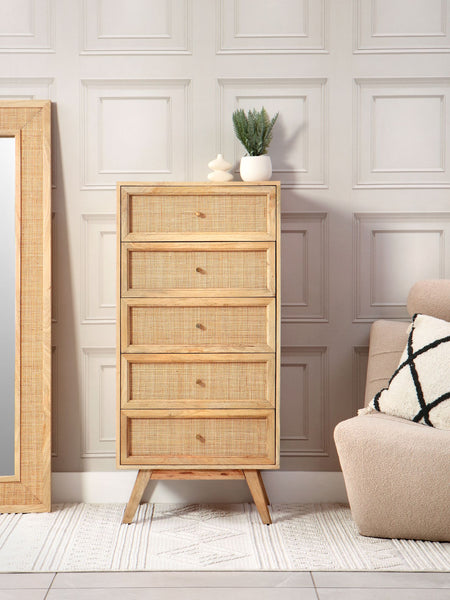
A bright garden room can look finished on paper and still feel slightly unresolved in real life. The light is right, the flooring is down, the paint has dried - but the furniture is what decides whether the space feels inviting or merely empty. This guide to cane furniture is for homeowners who want something warmer, more characterful and better suited to relaxed living than the usual short-lived alternatives.
Cane furniture has long been associated with conservatories, but that view is now far too narrow. In extended kitchens, orangeries, reading corners and calm family spaces, it brings a natural texture that softens architecture and sits comfortably with changing light. It has a quiet presence. That matters in rooms designed for slow mornings, long conversations and afternoons that drift into evening.
What this guide to cane furniture should clear up
People often use rattan, cane and wicker interchangeably, and that can make choosing furniture more confusing than it needs to be. Cane refers to the outer skin of the rattan plant and is often used in weaving and detailing. Rattan is the natural material itself, valued for its strength, flexibility and organic beauty. Wicker describes the weaving method rather than the material. Once you understand that distinction, it becomes easier to judge what you are buying and why one piece may feel very different from another.
For the buyer, the practical point is this: natural materials have their own character. They are not trying to look manufactured or perfectly uniform. A well-made cane piece will show subtle variation in tone and texture, and that is part of its appeal. In a home that values natural materials and lasting comfort, those details tend to feel reassuring rather than imperfect.
Why cane furniture still suits the way we live now
There is a reason cane furniture has endured. It works especially well in light-filled spaces because it never looks heavy, even when generously sized. In a conservatory or orangery, where sunlight shifts through the day, cane catches and reflects light in a softer way than dense, flat surfaces. The room remains airy, which is often exactly what people want from these spaces.
It also suits a broader range of interiors than many expect. In a period property, it can echo architectural detail without becoming fussy. In a newer extension, it introduces texture and warmth that stop the room feeling too hard-edged. Paired with upholstered cushions, timber tables and soft furnishings, it becomes part of a room rather than a statement piece that demands all the attention.
There is also the question of comfort. Cane furniture is often chosen for rooms used differently from the main sitting room - places for reading, entertaining, working quietly or enjoying the garden view. The best pieces support that gentle, flexible use. They are comfortable enough to linger in, yet visually light enough to keep the room feeling open.
How to choose cane furniture for your space
The first decision is not style but setting. A compact conservatory needs furniture with a lighter footprint and sensible proportions, while a larger garden room can take deeper seating and a fuller arrangement. It is tempting to think in terms of individual items, but these spaces work better when considered as a whole. A sofa may fit on the measurements, yet still feel too dominant once side tables, lamps and walking space are taken into account.
Think carefully about how the room is used. If it is primarily a place for morning coffee and occasional guests, an elegant pair of chairs with a small table may be enough. If it doubles as an everyday living area, supportive seating and durable cushions become more important. For some households, modularity matters less than comfort and visual balance. For others, especially in family spaces, practicality will carry more weight.
Cushions deserve more attention than they often get. The frame may draw the eye first, but the cushions determine much of the comfort and much of the room's finished look. Fabric choice can make a cane suite feel formal, relaxed, coastal, classic or quietly contemporary. Neutral tones are enduring, but a deeper colour or botanical pattern can give a light-filled room welcome depth.
Style, shape and finish
Not all cane furniture looks traditional. Some designs have the graceful curves many people associate with classic conservatory pieces, while others are cleaner lined and better suited to modern extensions or garden rooms. Neither is inherently better. It depends on the architecture of the room and the atmosphere you want to create.
Curved arms and woven detail often bring softness to a bright room with hard surfaces such as stone flooring, glazing and painted walls. Simpler silhouettes can be very effective in open-plan settings where the furniture needs to sit comfortably alongside a kitchen or dining area. The key is consistency. If the room already has strong visual features, furniture that is calm and well-proportioned usually ages better than something trying too hard to be noticed.
Finish matters too. Natural tones tend to be the most versatile because they sit well with greenery, timber and daylight. Painted finishes can work beautifully in certain interiors, though they ask a little more of the wider scheme. If you are furnishing an in-between space that changes through the seasons, natural finishes usually give you greater freedom with rugs, cushions and accessories later on.
A guide to cane furniture care and longevity
One of the pleasures of cane furniture is that it does not ask for fussy maintenance, but it does reward sensible care. Regular dusting keeps the weave looking fresh, and a soft brush attachment helps remove dust from the finer details. Spills should be dealt with promptly, especially on cushions, and the furniture benefits from a stable indoor environment rather than extremes of damp or dryness.
Sunlight is part of what makes these rooms so attractive, but constant strong exposure in one spot can affect any natural material over time. Rotating cushions and occasionally repositioning smaller pieces can help the room wear more evenly. This is not a reason to avoid cane furniture in bright spaces - quite the opposite - but a reminder that natural materials are at their best when treated with a little consideration.
Quality also plays a significant part in longevity. Well-crafted frames, careful weaving and properly made cushions are not small details. They are what determine whether a piece still looks and feels good after years of daily use. That is where buying from a genuine specialist can make all the difference. Heritage on its own is not enough, but experience in natural materials tends to show in the furniture itself.
Where cane furniture works best in the home
The obvious setting is the conservatory, and for good reason. Cane furniture belongs naturally in spaces with a close relationship to the garden. Yet some of the most successful schemes now appear elsewhere. In a garden room, it can create a more relaxed alternative to conventional lounge furniture. In an orangery, it bridges the gap between architecture and planting beautifully.
It also works well in extended kitchens where one corner is intended for reading, coffee or conversation rather than television. A pair of cane chairs with a lamp and table can establish a distinct zone without making the room feel divided. In bedrooms and landings, occasional pieces bring texture without heaviness. Even a single chair can change the mood of a space if the proportions are right.
What matters most is that the furniture suits the pace of the room. Cane is rarely at its best in spaces designed to feel sharp or overtly formal. It shines where comfort, light and ease are part of the brief.
Choosing with confidence
Buying furniture for a bright, multi-use room can feel more difficult than buying for a conventional sitting room because the expectations are different. You want comfort, certainly, but also lightness, durability and a sense that the furniture belongs to the architecture. Cane answers that brief unusually well when it is chosen thoughtfully.
A long-established British specialist such as Desser understands that these rooms are not an afterthought. They are often the spaces people value most - places to pause, host, read, work or simply watch the weather change. The right furniture should honour that.
If you are choosing cane furniture now, think beyond filling a room. Think about how the space should feel at nine in the morning, on a grey Sunday afternoon, or with the lamps on after dusk. The best pieces will still feel right in all of those moments.