A summerhouse can be far more than a place to store garden cushions or escape for an hour on a warm afternoon. Furnished well, it becomes the room that makes home life feel a little more spacious: somewhere for a quiet coffee, a long lunch with friends, an evening read or simply a different view of the garden. The question of how to furnish a summerhouse begins not with a shopping list, but with how you want to live in it.
The most inviting schemes feel considered rather than crowded. They respect the scale of the building, make the most of its daylight and bring enough comfort to tempt you outside in every season you intend to use it.
Start with the purpose, not the furniture
Before measuring for a sofa or choosing a colour, decide what the summerhouse needs to do. A compact building used as a reading retreat asks for a different approach to one that will host family suppers, workdays or weekends with guests. Trying to make one small room serve every possible purpose often leaves it feeling unsettled.
For a relaxation space, prioritise comfortable seating, a low table and soft lighting. If it will be used for dining, begin with the table and allow proper room to move around it. A work-and-leisure space benefits from a clear divide: perhaps a writing desk facing the garden, with a pair of lounge chairs at the opposite end. The point is not rigid zoning, but giving each activity a natural place.
Also be honest about how often the room will be heated and used outside the summer months. A well-insulated, electrified garden room can carry the comfort of an additional living room. A more seasonal timber summerhouse may be best furnished simply, with pieces that can be protected or brought indoors during prolonged cold and damp weather.
Measure the room as it is used
Summerhouses can look generous when empty, then become surprisingly tight once doors swing open, chairs are pulled back and a side table appears beside every seat. Measure the internal footprint, window positions, ceiling height, doors and any radiator or stove before making decisions. Marking out the footprint of larger pieces with newspaper or masking tape is a useful way to test a layout without commitment.
Leave a comfortable route from the entrance to the garden-facing view. In a narrow room, placing seating along the longer walls can preserve the centre. In a square room, a small conversational arrangement often works well, with two chairs facing a compact sofa or loveseat. Avoid pushing every item hard against the walls simply because the room is small. A little breathing space around furniture can make it feel calmer and more generous.
Scale matters as much as square footage. Deep, high-backed seating may overwhelm a petite building, while slender-legged occasional furniture can feel too insubstantial in a substantial oak-framed garden room. Choose pieces with visual lightness, but enough presence to make the room feel properly lived in.
Choose natural materials for light-filled spaces
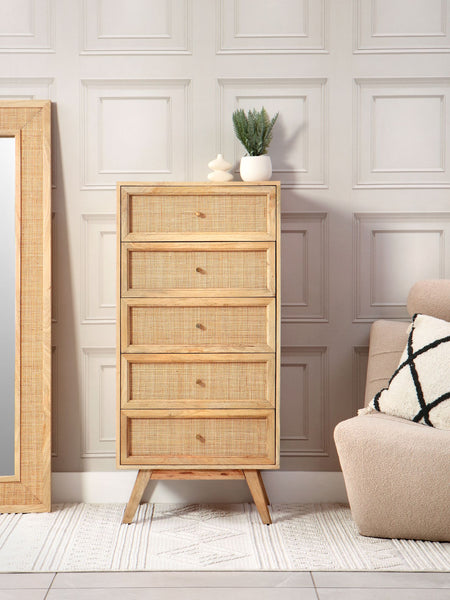
A summerhouse sits close to the garden, so its materials should feel at home beside changing leaves, shifting light and the texture of timber. Natural rattan and cane bring warmth without blocking the view or making the room feel heavy. Their open, hand-crafted character works especially well where sunlight is abundant, adding shape and texture while retaining an easy sense of airiness.
This is also where quality makes a difference. Well-made natural furniture has a quiet durability and a depth of finish that rewards everyday use. Desser has spent more than a century working with rattan, and its approach remains rooted in furniture made for the relaxed, light-filled spaces people create now.
For a summerhouse, consider a rattan sofa with supportive, generously cushioned seating, paired with one or two occasional chairs rather than a full suite if space is limited. A footstool can offer an extra perch when visitors call, then return to its role as a place to rest your feet. Tables in mango wood, timber or woven finishes add substance and keep the scheme grounded.
Natural materials do ask for sensible care. Keep furniture away from persistent damp, ensure the room is ventilated and use blinds or curtains to soften harsh direct sun where necessary. If your summerhouse is unheated through winter, follow the care guidance for each piece and avoid leaving upholstered cushions in conditions that are likely to feel cold or damp for long periods.
Build comfort from the seat outwards
A beautiful chair that no one chooses to sit in soon becomes decoration. Start with supportive seating and cushions that feel as good at the end of a long afternoon as they do when first arranged. UK-made cushions offer the welcome reassurance of considered filling, fabric and finish, while removable covers can make everyday maintenance more manageable.
Choose upholstery with the garden room's practical reality in mind. Soft neutrals, warm greys, olive greens and earthy tones sit comfortably beside timber and planting, while a richer botanical or checked accent can bring personality without taking over the room. If the summerhouse opens directly onto a lawn or terrace, fabrics that cope gracefully with the occasional muddy paw, dropped drink or child returning from the garden are worth prioritising.
Layer in a rug if the floor allows it. It will define the seating area, soften floorboards and make a summerhouse feel warmer on cooler mornings. Keep its proportions generous enough to sit under the front legs of the seating, rather than choosing a small rug that floats in the middle of the room.
Plan lighting for more than sunny days
Daylight is a summerhouse's great asset, but lighting determines whether you use it after four o'clock in autumn. One bright ceiling fitting alone can make the space feel functional rather than welcoming. Aim for pools of softer light at different heights: a table lamp near a reading chair, a floor lamp beside the sofa and a gentle overhead light for practical tasks.
Warm-toned bulbs generally suit timber, rattan and woven textures better than stark white light. If there is no fixed electricity, rechargeable table lamps and battery-operated wall lights can create a similarly relaxed atmosphere, though they are less suitable as the main source of light for work or dining.
Windows also need attention. Sheer curtains, linen-look blinds or simple woven shades can filter glare while preserving the connection to the garden. The right window treatment gives the room privacy at dusk and helps retain warmth, without making a small building feel closed in.
Keep storage discreet and useful
The quickest way for a summerhouse to lose its appeal is to become the household overflow room. Build in just enough storage to support its purpose: a low cabinet for games and throws, a console for glasses and serving pieces, or a lidded basket for reading materials. A well-chosen storage piece can also anchor a wall that would otherwise feel bare.
Be selective about what earns a place. A few books, a ceramic lamp, a favourite pot and a framed print are more effective than shelves filled edge to edge. The garden is already providing colour and interest beyond the glass; the interior need not compete with it.
Let the garden lead the palette
When considering how to furnish a summerhouse, look outward before you choose a scheme. The view is part of the room. A leafy, enclosed garden may suit pale cushions, honeyed timber and light woven textures that lift the shade. A contemporary garden with stone paving and architectural planting can carry deeper charcoal, sage and natural wood with confidence.
Rather than matching every colour exactly, borrow the undertones you see outside. Mossy greens, clay, oat, faded blue and soft terracotta all create a connection that still feels timeless when the planting changes. Introduce colour through cushions, throws and smaller accessories first. They are easier to refresh than major furniture and allow the foundations of the room to remain calm.
A summerhouse need not be dressed only for high summer. With comfortable seating, useful lighting and a few carefully chosen natural pieces, it can become the place you go when you want to feel close to the garden, whatever the weather is doing beyond the windows.