An orangery asks more of furniture than most rooms do. It is brighter than a typical sitting room, more exposed to shifts in temperature, and often expected to do several jobs at once - morning coffee spot, family room, entertaining space and quiet retreat. That is why knowing how to furnish an orangery is less about filling it with pieces you like, and more about choosing furniture that suits the way the room actually lives.
The best orangeries feel calm and easy to use. They are generous with light, but never stark. They are comfortable enough for everyday living, yet considered enough to feel part of the wider home. Furnishing one well comes down to balance - scale, texture, layout and practicality all matter.
Start with how the room is used
Before choosing a sofa, armchair or table, step back and decide what the orangery is really for. Many homeowners begin by thinking about style, when function should come first. A space used mainly for reading and relaxing needs a different arrangement from one connected to a kitchen and used for long lunches or weekend gatherings.
If your orangery serves as a second living room, comfort should lead. Deep seating, occasional tables and soft lighting will matter more than a large dining set. If it is an extension of the kitchen, you may want a more social layout with flexible seating and surfaces for drinks, serving and conversation. Some rooms need to do both, in which case zoning becomes useful.
It is worth being honest here. A room designed for formal entertaining but used daily by family will quickly feel wrong. The best furnished orangeries are shaped around real habits, not idealised ones.
How to furnish an orangery with the right layout
Layout is what makes an orangery feel intentional rather than improvised. Because these rooms are often open, bright and glazed on several sides, it can be tempting to push all the furniture to the edges. In practice, that usually leaves the middle of the room feeling empty and the seating disconnected.
Instead, treat the orangery as you would any well-planned living space. Create a central arrangement with a clear purpose. A sofa with two armchairs opposite, anchored by a coffee table and softened with a rug, gives the room a centre of gravity. If space allows, a second zone can sit beyond it - perhaps a bistro table for breakfast, or a console and lamp near the garden doors.
Circulation matters just as much as the furniture itself. You need enough room to move comfortably between seating, doors and any adjoining kitchen or dining area. In an orangery, this is especially important because the connection to the garden is part of the appeal. Furniture should never obstruct that sense of flow.
Bay windows, lantern roofs and wide spans of glazing can also create awkward edges. Those spots often suit curved-backed chairs, compact side tables or a well-proportioned loveseat better than large square pieces.
Choose materials that suit a light-filled space
An orangery benefits from furniture that looks at home in natural light. Heavy, overly formal pieces can feel out of place, particularly in rooms where the boundary between indoors and out is softened by planting, garden views and changing daylight.
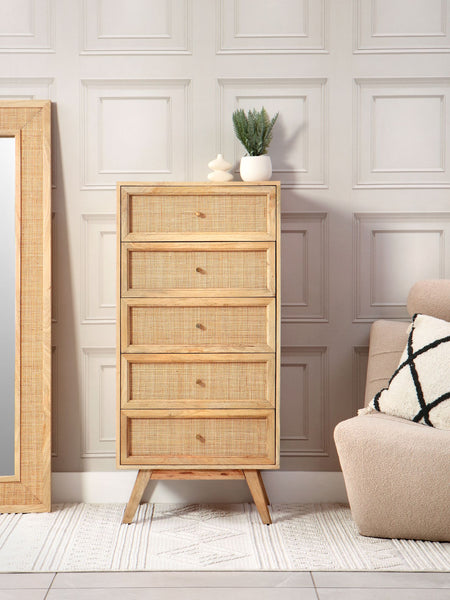
This is where natural materials come into their own. Rattan and cane have a visual lightness that works beautifully in orangeries. They add texture without making the room feel crowded, and they sit comfortably alongside timber, stone floors, painted joinery and upholstery in soft, natural tones. For spaces designed around relaxed living, they offer both ease and character.
That does not mean every piece needs to match. In fact, too much of one material can flatten the room. A natural rattan sofa or armchair can be paired with an upholstered footstool, a mango wood side table or a painted cabinet to build depth. The room should feel layered, not themed.
Practicality matters too. Bright rooms can be hard on some finishes and fabrics, so consider how materials will sit in direct sunlight over time. Removable cushion covers, quality upholstery and well-made frames are worth prioritising. In a room that sees daily use, longevity is part of good design.
Scale matters more than you think
One of the most common mistakes in an orangery is getting the scale wrong. Furniture that is too small can look lost beneath a glazed roof and tall windows. Furniture that is too bulky can make a bright room feel unexpectedly cramped.
The proportions of the room should guide your choices. If you have a generous orangery with high ceilings, a full seating arrangement with substantial arms and deep cushions may suit it well. In a narrower space, lighter frames and slightly raised furniture can keep the room feeling open.
It helps to think in visual weight as much as physical size. Open-weave furniture, exposed legs and slimmer silhouettes tend to read more lightly, which is often useful in rooms with plenty of architecture already on show. A few well-sized pieces generally work better than many smaller ones.
Bring softness into the scheme
Orangeries are rich in hard surfaces - glass, brick, stone, timber and tiled floors are common. Without enough softness, the room can feel echoing or visually cold, even on a sunny day.
Soft furnishings are what make the room settle. Cushions in textured weaves, upholstered seat pads, a properly sized rug and lined curtains or blinds all help absorb sound and add comfort. They also let you bring in colour without overwhelming the architecture.
There is no need to overcomplicate the palette. Earthy neutrals, greens, soft blues and warm botanical tones tend to sit naturally in these spaces, especially where the garden is part of the view. Pattern can work well too, but it usually feels best when used with restraint - perhaps on cushions or an accent chair rather than across every surface.
Lighting should carry the room into evening
A beautifully furnished orangery can still fall flat after dark if the lighting has not been considered. Roof lanterns and glazing do the work during the day, but evenings need warmth and atmosphere.
Overhead lighting alone is rarely enough. Layered lighting works far better - a table lamp beside a chair, a floor lamp near the sofa, perhaps wall lights if the architecture allows. This gives the room the same sense of comfort as the rest of the house and stops it feeling like an afterthought once the sun goes down.
Think about where people sit and what they do there. Reading corners need directed light. Social seating benefits from softer pools of light at eye level. If the orangery opens onto the garden, gentle lighting inside can also make that view feel more inviting after dusk.
Furnish for all-year comfort
The question of how to furnish an orangery is really a question of how to make it comfortable across the seasons. A room that feels glorious in June but unusable in January is not fully working for the home.
Furniture can help. Upholstered cushions, layered textiles and warm-toned finishes keep the room welcoming in cooler months. In summer, breathable natural materials and a less crowded layout help the space remain fresh and easy.
Window treatments are part of this equation too. Blinds or curtains can soften bright midday sun and help regulate temperature. If your orangery is particularly sunny, think carefully about where seating is placed at different times of day. The perfect chair in spring may sit in full glare by August.
Add storage and occasional pieces thoughtfully
The finishing touches often determine whether an orangery feels complete. Side tables give seating practical purpose. A console can anchor an empty wall. Storage pieces help the room cope with real life - books, throws, tableware, games, children’s things.
What matters is choosing these pieces with the same care as the larger furniture. A storage bench may suit a family-focused orangery beautifully, while a slim display cabinet can lend structure to a more elegant scheme. The aim is usefulness without clutter.
Plants, ceramics and lamps can bring personality, but restraint is usually the better choice in such a light-filled room. Let the architecture breathe. The view, the textures and the furniture should do most of the talking.
How to furnish an orangery without making it feel separate
An orangery should feel connected to the rest of the home, not like a different design language altogether. That does not mean it must match room for room, but there should be enough continuity in colour, materials or mood to make the transition feel natural.
If your adjoining kitchen uses warm painted tones and timber accents, echoing those finishes in the orangery will help the spaces sit together. If the house is more contemporary, cleaner lines and a restrained palette may be right. The room can be lighter and more relaxed than the interior around it, but it should still belong.
This is often where heritage materials earn their place. Natural rattan, cane, wood and soft upholstery have a timelessness that bridges traditional and modern homes with ease. They bring warmth to newer extensions and sit comfortably within period properties too.
An orangery is one of the few rooms in the house that changes character by the hour - bright and airy in the morning, restful by afternoon, softly reflective in the evening. Furnish it with that rhythm in mind, and it becomes far more than an attractive extension. It becomes the room everyone quietly drifts towards.