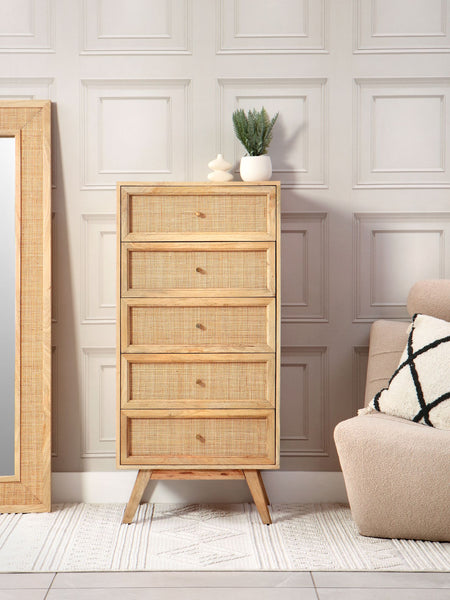
A bright sitting room can easily become too polished: hard floor, broad glazing, clean lines and nowhere that quite invites you to settle. Living room rattan furniture changes that feeling. Its natural texture brings warmth without weight, while its open weave allows daylight to move through a room rather than stopping it.
For homes with garden rooms, conservatories, orangeries or extended living areas, this matters. These are spaces made for slower mornings, Sunday papers, family conversations and the moment a summer evening moves indoors. The furniture should be comfortable enough for everyday use, but considered enough to belong to the rest of the house.
Why natural rattan belongs in the living room
Natural rattan has a character that painted timber and fully upholstered furniture cannot quite replicate. Each frame carries subtle variation in tone and weave, so a room feels layered and lived-in rather than overly matched. It is tactile, warm to the eye and especially at ease alongside linen, wool, timber, stone and planting.
Its visual lightness is equally useful. A generously proportioned rattan sofa does not feel as block-like as a solid upholstered equivalent, which can make it a good choice for rooms with plentiful glass or an open view of the garden. In a smaller lounge, the raised frame and woven detail leave more visible floor space, helping the room breathe.
That does not mean rattan is only for sunrooms. A carefully chosen suite can sit beautifully in a traditional sitting room, a kitchen extension or a garden-facing snug. The key is treating it as proper living-room furniture, not as a seasonal extra. Choose supportive seating, well-fitted cushions and proportions that suit how the room is actually used.
Start with the room, not the suite
The best furniture decisions begin with the shape and rhythm of a room. Before deciding between a sofa, loveseat or armchairs, consider where people naturally enter, pause and look. In a garden room, that may mean preserving a clear route to doors and keeping lower pieces nearest the glazing so the view remains part of the room.
A sofa and two armchairs create an easy conversational arrangement when there is enough width, particularly around a central coffee table or footstool. For a narrower space, a compact sofa paired with one statement chair may feel more relaxed than trying to fit a full suite against every wall. Two chairs facing the garden can be particularly effective where the room is used for reading, coffee and quiet time rather than larger gatherings.
Leave enough space to move around the seating without turning sideways. As a useful guide, allow roughly 45 cm between a coffee table and the front of a sofa or chair, adjusting slightly for the scale of the room. It is a modest detail, but it makes the difference between furniture that looks good in a photograph and a room that works every day.
Consider the view from adjoining rooms
Many modern extensions are open to a kitchen or dining area, so the back of a sofa may be as visible as its front. Rattan is particularly well suited here because the frame itself has presence. It can create a soft division between zones without closing one area off from another.
If your living room opens directly onto the garden, avoid placing every piece in a straight line along the windows. Angling an armchair or floating a sofa slightly into the room can make the arrangement feel more intentional and encourage conversation, while still keeping the connection with outdoors.
Choose cushions for lasting comfort
The frame gives living room rattan furniture its distinctive identity, but cushions determine how it feels at the end of a long day. Deep seat cushions are inviting, though the right depth depends on who will use them. A lower, deeper style suits a relaxed lounge where people tend to curl up, while a more upright profile is often better for reading, entertaining and older family members who prefer easier support.
Look beyond colour when choosing fabric. In a light-filled room, fabric will be seen from every angle and in changing daylight. Soft neutrals such as oatmeal, flax, warm grey and gentle sage allow the rattan to remain the focal point. They also provide a calm foundation for patterned cushions, throws and seasonal changes.
Darker fabrics can bring welcome definition to a large orangery or room with pale floors, but they may absorb more visual weight in a compact conservatory. If the room receives strong sunlight, consider how the chosen shade will look at midday as well as in the softer light of evening. Requesting fabric swatches before committing is a sensible part of the process, particularly when matching existing curtains, flooring or wall colour.
UK-made cushions offer another quiet advantage: they are designed to give the frame the comfort and finish it deserves. Good cushion construction helps seating retain its shape, and removable covers make day-to-day care more manageable in a busy family home.
Building a room around rattan
Rattan does not require a themed interior. In fact, it is at its best when balanced with materials that add contrast. A substantial coffee table grounds a lighter woven suite. A wool rug softens tiled or timber floors. Ceramic lamps, framed artwork and generous leafy plants lend depth without competing for attention.
Avoid making every surface pale and woven, however tempting that first instinct may be. A room needs a little weight and variation. One darker timber piece, a richly coloured rug or linen curtains with a fuller drape can stop the scheme from feeling washed out.
Texture is often more effective than pattern in these spaces. Think boucle cushions beside smooth linen, a woven basket against a painted wall, or a simple striped throw over a natural frame. These elements add comfort and personality while allowing the furniture's craft to remain visible.
Match the scale of tables and storage
Coffee tables should be low enough to work with the seat height, but not so large that they dominate the arrangement. A round table can soften a room full of straight glazing and improve circulation in tighter spaces. Nesting tables are useful beside armchairs where a cup of tea, a book or reading glasses need a home without introducing unnecessary bulk.
Storage deserves thought too. A low sideboard or cabinet can provide a visual anchor on a blank wall while holding games, tableware or the everyday things that otherwise gather on surfaces. In a room with a garden view, choose fewer, better-placed pieces rather than filling every available wall.
Where rattan works best - and where to take care
Natural rattan is crafted for indoor living and thrives in dry, well-ventilated rooms. Garden rooms and conservatories are excellent settings when they are part of the home and protected from persistent damp, cold and extreme fluctuations in temperature. A well-insulated extension with blinds or shading is usually more forgiving than an unheated space left exposed through winter.
Direct, prolonged sun can affect natural materials and fabrics over time, just as it can timber floors, artwork and curtains. Use blinds, curtains or roof shading where necessary, and rotate loose cushions occasionally so they age evenly. This is not a reason to hide the furniture away from the light; it is simply sensible care for a material chosen precisely because it belongs in light-filled spaces.
For cleaning, regular gentle dusting with a soft brush attachment is usually enough to keep the weave looking its best. Attend to spills promptly according to the cushion fabric guidance, and avoid soaking the frame. Natural materials reward uncomplicated care: a little attention, given regularly, is far better than an occasional heavy-handed clean.
A considered investment for relaxed living
A well-made rattan frame is not a fleeting decorative choice. It is a piece of furniture with enough presence for the main living area, yet enough ease for a room that opens onto the garden. Its appeal lies in that balance: crafted but unshowy, distinctive but adaptable, comfortable without looking overstuffed.
At Desser, more than a century of working with natural rattan has shown that the most successful rooms are not assembled in one afternoon. They evolve through use, with the right seating at their centre and the layers around it added gradually.
Choose the frame that suits your space, the cushion fabric you will enjoy living with and the table that makes the room function. Then leave a little room for the things that make it yours: a favourite lamp, a well-read book, a throw brought in when the evening cools, and the view of the garden beyond.