A sunlit garden room asks more of its furniture than a conventional sitting room. It needs to feel comfortable through a long Sunday lunch, relaxed enough for a quiet morning coffee, and at home beside the greenery beyond the glass. That is why the question of rattan vs wicker furniture matters. The two terms are often used interchangeably, yet they describe different things - and understanding the distinction makes it far easier to choose pieces that will look right and live well in your home.
Rattan vs wicker furniture: the essential difference
Rattan is a natural material. It comes from a climbing palm, harvested for its long, flexible stems and valued for the combination of strength, lightness and natural character it brings to furniture.
Wicker, by contrast, is a method of making furniture. It describes the weaving technique used to create a surface, panel or form. Wickerwork can be made from a range of natural materials, including rattan, willow, reed and bamboo. In other words, a chair can be both rattan and wicker: its frame may be made from rattan, while its seat back or side panels are created using a woven wicker technique.
The confusion is understandable. In everyday conversation, wicker is often used as a catch-all term for woven furniture. But when you are considering quality, longevity and the particular feel of a piece, it helps to look beyond the label. Ask what material has been used for the frame, how it has been worked, and where the furniture will live.
Why natural rattan has such lasting appeal
Rattan has earned its place in British homes over generations because it is remarkably suited to relaxed, light-filled spaces. Its stems can be steamed and shaped into graceful curves, creating frames that are sturdy without feeling heavy. The material has a gentle visual warmth too, with tonal variation and markings that ensure no two pieces look entirely alike.
That character is difficult to manufacture. A well-made rattan chair does not simply fill a corner; it brings texture and a sense of ease to the room. It can soften the sharper lines of glazing, tiled floors and contemporary extensions, while sitting just as naturally alongside painted joinery, timber beams or traditional brickwork.
For a conservatory, orangery or garden room, this balance is especially valuable. These spaces often bridge house and garden, and rattan feels appropriate in both settings. It is substantial enough to create a proper living area, yet visually open enough to preserve the light and views that made the room appealing in the first place.
Cane, rattan and woven detail
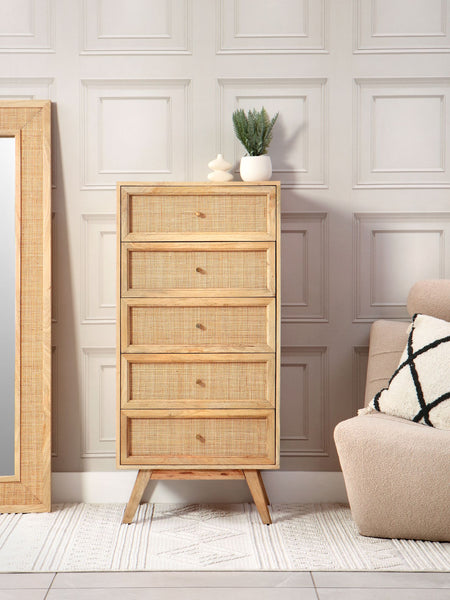
Cane is closely related to rattan, but it refers specifically to the outer skin of the rattan stem. This fine, strong material is often used for tightly woven panels in chair backs, cabinet doors and seat bases. The inner core of rattan may be used for binding and finer woven detail, while thicker lengths form the structural frame.
This is part of the beauty of traditionally made rattan furniture: one natural material can perform several roles. Curved arms, wrapped joints and woven panels each have a purpose, but together they create the layered craftsmanship people recognise and value.
How construction affects comfort and durability
The difference between rattan and wicker is not only a point of vocabulary. It influences how a piece is made, how it feels to use and how it should be cared for.
A quality rattan frame should feel reassuringly solid, with smoothly finished curves and neatly bound joints. Rattan is naturally flexible, which helps it absorb the everyday movement of a busy household without becoming harsh or rigid. Its relative lightness is useful too: a lounge chair can be moved towards the window for reading or drawn closer to a sofa when friends arrive without turning the room upside down.
Woven sections require a little more attention when assessing a piece. Look for an even, close weave, tidy ends and a finish that feels comfortable to the touch. A woven panel should enhance the design rather than appear as a thin decorative layer. Fine workmanship is often visible in the small details: the consistency of the weave, the way corners are finished and the confidence of the proportions.
Comfort, of course, is also shaped by the cushions. Deep, supportive cushions transform rattan seating from an occasional perch into somewhere you genuinely want to spend an evening. For British homes, removable covers and a choice of fabrics are practical considerations as well as aesthetic ones. A softer neutral can make a room feel calm and open, while a botanical print or richer woven fabric can give a garden room greater personality.
Which style suits your space?
There is no single answer, because the best choice depends on the room, the way you use it and the atmosphere you want to create.
In a bright conservatory, a rattan sofa and armchairs can create the comfort of a living room without obscuring the garden. Choose a more open frame if the space is compact or receives plenty of direct light. The visible weave will add texture, but the furniture will still feel airy.
For a larger orangery or extension, a more generously proportioned rattan suite can anchor the room. Consider how you entertain: a pair of occasional chairs may be ideal for conversation, while a corner arrangement or two-seat sofa will suit family time. Tables matter here too. A well-placed coffee table makes the space feel usable, whether it holds afternoon tea, a stack of books or the board game that has quietly taken over the weekend.
If your taste is more contemporary, look for clean silhouettes, restrained weaving and cushions in linen-look neutrals, charcoal or warm stone. If you prefer a layered, country-inspired interior, curved arms, natural finishes and patterned cushions will feel more at ease. Rattan is not confined to one look. Its strength is that it can be styled with confidence around the architecture and character already present in your home.
Where natural rattan works best
Natural rattan furniture is made for interiors and protected living spaces. A garden room, conservatory, orangery, covered terrace or well-ventilated extension can be an excellent home for it, provided the furniture is sheltered from direct rain and prolonged damp.
This does not mean rattan is fragile. Properly cared for, it is an enduring material with a history of staying in homes for many years. But it benefits from sensible placement. Avoid leaving it exposed to changing weather, and do not position it against a radiator or in intense, uninterrupted sun for long periods. Excessive heat can dry natural fibres, while persistent moisture can affect the finish and woven details.
A light dusting with a soft brush or vacuum upholstery attachment will usually keep the frame looking fresh. Wipe occasional marks with a barely damp cloth, then allow the surface to dry naturally. Cushions should be cared for according to their fabric instructions, particularly in rooms where doors are frequently open to the garden.
Choosing with confidence
When comparing rattan and wicker furniture, do not feel you have to choose one over the other. The most considered pieces often bring them together: a shaped natural rattan frame, carefully woven panels and generous cushions made for everyday comfort.
Instead, focus on the quality of the material and workmanship, the proportions of the furniture and the conditions of your room. Sit in the chair if you can. Notice the support through the seat, the height of the arms and whether the scale feels right beneath your windows and alongside your other furniture. A beautiful frame is only part of the story; the piece should invite you to use the space more often.
For more than a century, Desser has worked with natural rattan because it offers precisely that combination of craft, comfort and quiet character. Choose it well, and your furniture will not compete with the light, planting and architecture around it. It will make the room feel like the place everyone naturally chooses to be.