A home extension changes more than the footprint of a house. It changes where mornings begin, where friends gather and how the garden is felt from indoors. The right furniture for home extension living should meet that opportunity with comfort, character and a sense that it has always belonged there - rather than treating a beautiful new room as somewhere to simply place a spare sofa.
Whether the project is a garden room, orangery, conservatory or a larger kitchen-living space, these rooms tend to be defined by light. They often have wide doors, garden views and more open sightlines than the rooms they join. Furniture needs to be considered from every angle, feel inviting at different times of day and sit comfortably between the architecture of the home and the natural world beyond the glass.
Start with the purpose of the room
Before choosing a shape, fabric or finish, decide what the extension is there to do. A room designed for long Sunday lunches needs a different approach from one intended for reading, coffee and conversation. Many of the most successful extensions do both, but one use should lead the layout.
For a relaxed sitting room, begin with generous seating rather than filling the floor with occasional pieces. A pair of lounge chairs with a sofa or loveseat can create a more sociable arrangement than pushing every seat against the wall. In an extension with bifold or sliding doors, leave a clear route to the garden. That small discipline makes the room feel calmer and preserves the indoor-outdoor connection that made the project appealing in the first place.
If the extension joins a kitchen, dining and living area, create gentle zones rather than trying to make every item match exactly. A dining table gives the room a natural anchor; upholstered seating or a rattan armchair and side table can establish a softer corner nearby. The relationship between those zones matters more than rigid uniformity.
Why natural materials suit light-filled spaces
Strong daylight is wonderfully revealing. It shows the grain of timber, the weave of cane and the texture of a well-chosen fabric. This is why natural materials work so convincingly in home extensions: they have depth and variation, and their appearance shifts warmly with the light rather than feeling flat or overly formal.
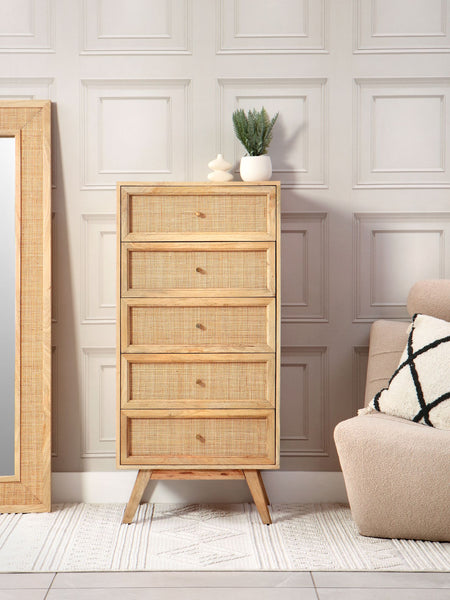
Natural rattan is particularly at home in rooms that look onto a garden. Its hand-finished character brings an easy, settled quality to crisp new architecture, while its open weave keeps a space visually light. It can soften large expanses of glazing and stone flooring without making the room feel crowded. For homeowners who want a room with personality but not fuss, this balance is difficult to beat.
Mango wood offers a similarly grounded note, especially for coffee tables, consoles and storage. Its natural grain provides useful contrast alongside pale walls and contemporary glazing. Combined with cushions, rugs and upholstered pieces in considered tones, these materials make an extension feel lived in from the beginning.
That does not mean every surface needs to be natural. A room benefits from contrast. A clean-lined lamp, a simple ceramic vase or a contemporary occasional table can prevent the scheme becoming overly rustic. The aim is not to recreate a particular look, but to give the space texture, warmth and longevity.
Choosing furniture for home extension proportions
New rooms can be deceptively difficult to furnish. High ceilings and generous glass make furniture appear smaller than it did in a showroom or in an older reception room. Conversely, a narrow extension can quickly feel congested if every piece is deep, wide and low.
Measure the usable floor area, not simply the room’s overall dimensions. Account for door swings, pathways to the garden, radiators or underfloor heating controls, and the clearance needed around a dining table. As a guide, allow enough room to pull a dining chair back without interrupting a route through the space. In seating areas, a coffee table should be near enough to be useful but far enough away to let people sit down easily.
Scale is about visual weight as much as centimetres. A sofa with low arms can suit a lower-ceilinged extension, while a taller-backed chair may provide welcome presence in a lofty garden room. Rattan seating, with its visible framework and woven detail, can offer substantial comfort without blocking views across the room.
It is also worth considering the view into the extension from the original house. If it is visible from the kitchen or hallway, choose the back of a sofa or chair with the same care as its front. Freestanding furniture often earns its place here because it looks composed from all sides.
Give every seat a reason to be there
An attractive chair is not automatically useful. Place seating where someone can enjoy a view, join a conversation or reach a table for a drink or book. A single armchair beside the doors may be perfect if it catches the afternoon sun; two chairs facing one another can make a small extension feel purposeful rather than incomplete.
Avoid the temptation to fill empty corners for the sake of it. Air around furniture is part of the design, particularly in a room built to bring in daylight.
Comfort should last beyond the first impression
Extensions are often the rooms people imagine using most, yet they can be demanding environments. They may receive direct sun, feel cooler on winter evenings or become busy during family gatherings. Furniture should be selected for the way the room will actually be used throughout the year.
Look for supportive seat cushions, well-proportioned backs and upholstery that feels good against bare arms in warmer weather. Removable cushion covers can be helpful in hardworking family spaces, while a choice of fabrics makes it easier to connect new furniture with existing flooring, paint and window treatments. UK-made cushions offer the additional reassurance of considered construction and familiar quality control.
Colour deserves a practical eye. Pale neutrals can make a compact extension feel spacious and calm, but a warmer oatmeal, sage, soft blue or muted terracotta may be more forgiving in a room opening straight onto the garden. Darker accents can add definition, especially if the extension has pale walls and abundant daylight. The best choice depends on how much sun the room receives and whether it needs to feel airy, cosy or both.
Layering is what turns furniture into a place to stay. A textured rug can define a seating area, cushions can change with the seasons, and a table lamp adds warmth once daylight fades. These are not afterthoughts. They allow a glass-rich room to feel comfortable on an October evening as well as a bright June afternoon.
Plan for a room that evolves
A home extension rarely remains exactly as first imagined. Children grow, working patterns shift and a dining area may become the preferred place for weekend breakfasts or evening drinks. Choose key pieces with enough versatility to accommodate that change.
A substantial dining table may host daily meals, homework and celebrations. Nesting tables can provide an extra surface when guests arrive without permanently claiming floor space. Storage is particularly valuable in open-plan extensions, where the visual calm of the room depends on having somewhere for books, throws, games and everyday clutter to go.
Investing in fewer, better pieces is often the wiser route. Furniture with a clear material story and lasting construction is easier to live with than a room assembled around a passing trend. Desser has spent more than a century creating furniture for relaxed, light-filled spaces, with natural rattan, crafted cushions and considered finishes that make this approach feel both practical and personal.
Let the extension feel connected, not copied
A successful extension need not mirror every room in the house. In fact, a little change of mood can be one of its pleasures. The key is to carry through a few connecting threads: perhaps the same timber tone, a repeat of a favourite colour, or upholstery that picks up the shade of existing curtains or artwork.
If the original house is traditional and the extension more contemporary, natural rattan and warm wood can be especially useful bridge materials. They sit comfortably beside older joinery and newer glazing alike. The result feels collected over time, not bought as a set.
Give the room time once the furniture is in place. Live with the light, notice where people naturally sit and adjust the smaller layers accordingly. The most welcoming extensions are not those that look finished on the first day, but those that gradually become the place everyone chooses to be.