An orangery rarely behaves like the rest of the house. By mid-morning it is bright and open, by late afternoon it can feel calm and cocooning, and in the evening it often becomes the room everyone drifts towards. The best orangery furniture ideas work with that changing character rather than against it, creating a space that feels settled, comfortable and easy to live in all day.
That usually means resisting the urge to fill it as if it were simply another sitting room. An orangery asks a little more of furniture. It needs to sit comfortably in strong natural light, soften hard architectural lines and still feel inviting when the weather turns grey. Materials with warmth and texture tend to do this best, which is why natural rattan, cane, wood and well-chosen upholstery feel so at home here.
Orangery furniture ideas start with how you use the room
Before choosing a sofa, occasional chair or dining set, it is worth being honest about the role the orangery plays in daily life. Some are used as quiet morning rooms with a coffee table and two generous chairs. Others are busy family spaces linked to the kitchen, expected to cope with reading, entertaining and the odd homework session. Many sit somewhere in between.
This matters because scale and layout are more important in an orangery than almost anywhere else. A room with a lantern roof and wide glazing can swallow undersized furniture, yet the same room can feel cluttered very quickly if every piece is heavy or overbuilt. The aim is balance - enough presence to anchor the space, enough openness to let the architecture breathe.
Build the room around a relaxed seating area
For most homes, the strongest starting point is a conversational seating arrangement. In an orangery, this tends to work better than lining furniture rigidly against the walls. Bringing seating slightly inward creates a proper living area and stops the room feeling like a corridor of glass and brick.
Natural rattan sofas and armchairs are especially effective here because they have visual texture without the weight of bulkier furniture. They catch the light beautifully and keep the room feeling airy. Pair them with deep, supportive cushions in a neutral woven fabric and the look becomes softer, more settled and easier to live with through the seasons.
If the room is generous enough, a two-seater with a pair of matching chairs often feels more composed than one very large corner sofa. You gain flexibility, clearer sightlines and a layout that can adapt as the room changes from everyday use to entertaining.
Keep the centre light, not empty
A coffee table should give the seating area focus, but it does not need to dominate. In many orangeries, a woven or wooden table with a practical lower shelf works better than anything too polished or imposing. It adds structure while keeping the mood informal.
If you like a layered look, consider a coffee table with one or two smaller side tables nearby rather than a single oversized piece. That makes the room easier to use and allows each seat to feel properly served without crowding the centre.
Let natural materials do the hard work
There is a reason some furniture looks immediately at ease in light-filled rooms while other pieces feel slightly at odds with them. Orangeries sit between indoors and out, so materials that carry a sense of nature tend to bridge that transition more gracefully.
Rattan and cane bring texture and craftsmanship. Mango wood adds depth and grounding. Linen-look upholstery and tactile cushions soften the brightness of glazing and stone or tiled floors. None of these choices need to be rustic, and that is an important distinction. Done well, they feel refined, calm and quietly luxurious.
This is where many orangery furniture ideas succeed or fail. The room already has plenty of visual interest in the roofline, doors and garden outlook. Furniture should complement that, not compete with it. Natural finishes age well because they are not trying too hard.
Create a second zone if space allows
One of the pleasures of an orangery is that it can often hold more than one mood at once. If the footprint allows, a secondary zone can make the room far more useful without making it feel over-furnished.
A reading corner is one of the simplest ways to do this. An armchair with a footstool, a side table and a well-placed lamp can turn an unused corner into the best seat in the house. In a family orangery, a compact bistro table or small round dining set may be the better choice, particularly if the room opens from the kitchen and becomes a natural spot for breakfast or a quiet lunch.
The key is to avoid making both zones compete. If the main seating area is generous and cushioned, keep the second area lighter in profile. If the room already has a dining table elsewhere, a reading nook or bench seat may be more useful than trying to force in another place to eat.
Choose colours that work with daylight, not against it
Colour behaves differently in an orangery. Sunlight can sharpen contrasts and make cool shades feel cooler still, while overcast days can flatten colours that looked rich in a darker showroom or living room.
That is why earthy neutrals, soft greens, warm greys and muted botanical tones tend to be dependable choices. They sit comfortably with planting, garden views and natural materials. More importantly, they remain pleasant to live with across changing light conditions.
This does not mean everything should be beige. Pattern has a place, particularly in cushions, upholstery accents or an occasional chair. But it usually works best when the larger furniture pieces stay relatively calm. In a room with so much natural movement and brightness, restraint often feels more confident than contrast for its own sake.
Soften the architecture with textiles
Even the most beautifully built orangery can feel hard if every surface is reflective. Cushions, throws and a well-chosen rug add more than decoration - they absorb sound, introduce warmth and help define furniture groupings.
A rug beneath the main seating arrangement can be particularly useful in open-plan extensions, where it gives the orangery its own identity without physical division. Choose something with enough texture to complement woven furniture and enough practicality for everyday use.
Think carefully about dining furniture
Not every orangery needs a dining set, but where dining is part of the room's purpose, scale matters enormously. A table that is too large can make the whole space feel static. One that is too small can look apologetic.
Round tables are often a good answer in square or nearly square orangeries because they soften straight architectural lines and improve movement around the room. In longer spaces, a rectangular dining table may sit more naturally, especially if one end of the orangery is clearly intended for meals and entertaining.
Dining chairs with natural woven detail can help tie this area back to a separate seating arrangement, giving the room continuity rather than the feel of two unrelated schemes pushed together.
Use storage sparingly but intelligently
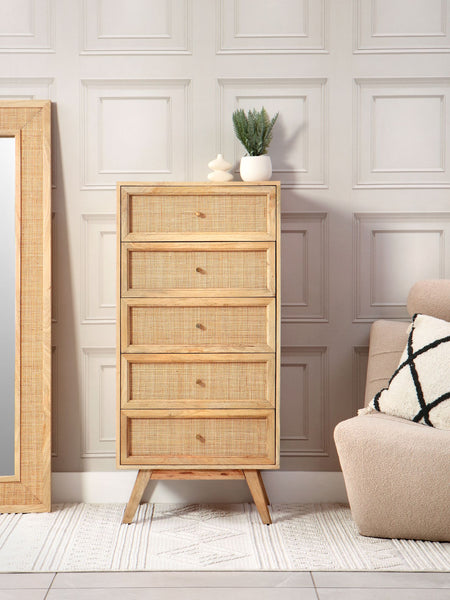
Because orangeries are so open and visible, clutter shows up quickly. A little storage goes a long way. A sideboard, console or lidded storage piece can keep the room feeling composed while also giving you somewhere for table linens, candles, games or everyday bits that would otherwise gather on display.
The trick is not to overburden the perimeter with furniture. Leave room for light to move, for doors to open generously and for the garden outlook to remain part of the experience. One well-made storage piece in the right place will usually serve the room better than several smaller items.
Respect the room's changing temperatures
Comfort in an orangery is not only about looks. It is also about how the space feels at different times of year. Furniture with breathable natural materials and quality cushions tends to be easier to live with in rooms that warm up in sunshine and cool down in winter evenings.
This is where craftsmanship matters. Well-made rattan furniture is particularly well suited to these relaxed, light-filled interiors because it offers durability without visual heaviness. Brands such as Desser have long understood that these are not occasional rooms in the old sense - they are lived-in extensions of the home, and the furniture needs to support that properly.
It also helps to leave a little flexibility in the scheme. A footstool that can move, a side table that serves different seats, or cushions that can shift with the season all make the room more adaptable.
The best orangery furniture ideas feel lived in from the start
A successful orangery is rarely the one with the most furniture in it. It is the one that feels instinctively comfortable at eleven in the morning, at dusk, on a bright spring day and in the middle of November. That comes from choosing pieces with warmth, texture and proper purpose, then giving them enough space to belong.
If you are furnishing an orangery now, start with the habits you want the room to hold - reading, talking, hosting, stretching out with a cup of tea - and let the furniture follow. The room will tell you quite quickly what feels right.