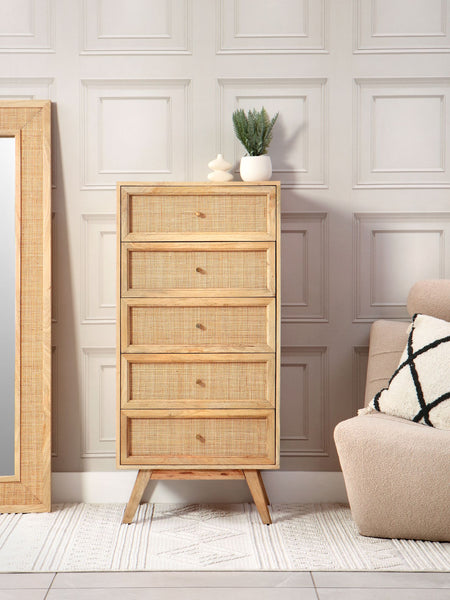
A sideboard often becomes the quiet anchor of a room. It is where glassware waits for guests, linen is kept within reach and the surface gains a lamp, a favourite bowl or a vase of garden stems. The top mango wood sideboards do more than provide storage: they bring warmth and visual weight to the light-filled spaces where families now spend much of their time.
For a garden room, extended kitchen or relaxed living area, mango wood has a particularly easy presence. Its natural grain offers character without making a room feel overworked, while its rich tones sit comfortably alongside rattan, cane, soft upholstery and painted walls. The right piece should feel considered rather than merely useful - generous enough to serve the room, but calm enough to let everyday life unfold around it.
What makes a mango wood sideboard worth choosing?
Mango wood is valued for its distinctive grain, which can vary from straight and subtle to lively and expressive. No two pieces of timber are exactly alike, so a well-made sideboard has a sense of individuality that uniform finishes cannot offer. This is especially appealing in rooms designed to blur the boundary between home and garden, where natural materials help the scheme feel settled and inviting.
There is also a practical reason to choose it. Mango trees are commonly harvested at the end of their fruit-bearing life, making the timber a thoughtful choice for homeowners who want natural materials with a clearer story. The detail still matters, however. Look beyond the headline material to the quality of the construction, the alignment of doors and drawers, the feel of handles and the finish applied to protect the surface.
A good sideboard should have enough substance to sit confidently beneath a large mirror or piece of art. Yet it should not feel heavy-handed. Mango wood works best when the design gives the grain room to speak, using clean proportions, understated hardware and carefully judged detailing.
The top mango wood sideboards by room and purpose
The best style is rarely the one with the most elaborate front. It is the one that answers the way you use the space. Before choosing a finish or door pattern, consider what needs to live inside it and how much room you can give it.
A wide sideboard for entertaining spaces
In an open-plan kitchen, dining room or orangery, a wide sideboard can take on the role of a serving station as well as storage. Three-door or four-door designs tend to work well here, giving you space for platters, table linen, candles and the glasses that otherwise crowd a kitchen cupboard.
Allow room on the top for practical use. If you enjoy hosting, the surface should be clear enough for drinks, serving dishes or a coffee tray without looking cluttered. A long, low silhouette also balances a dining table beautifully and provides a grounded counterpoint to glazing and high ceilings.
A compact sideboard for a garden room
Garden rooms can be full of light but short on uninterrupted wall space. A compact two-door sideboard is often the more sensible choice, particularly when a sofa, occasional chairs and doors to the garden all need to coexist. Choose a shallower design where the walkway is tight, and check the door clearance before committing to a cupboard-fronted piece.
This is where a sideboard earns its keep quietly. It can hold throws, board games, reading material and the small practical things that make a room comfortable in every season. Above it, a table lamp casts a softer evening light, helping the room feel as welcoming after dusk as it does on a bright afternoon.
A drawer-led design for everyday order
Cupboards are excellent for larger items, but drawers are often more useful for the objects that gather on household surfaces. A sideboard with a row of drawers gives a home to chargers, stationery, coasters, keys and spare candles, while the cupboard space below keeps bulkier pieces out of sight.
For a family kitchen or a living area used every day, this combination is hard to beat. It allows the piece to look composed without asking you to maintain showroom-perfect shelves. If the sideboard will sit close to seating, opt for handles and corners that feel comfortable to move around.
A statement piece with carved or panelled doors
Mango wood carries decorative detailing particularly well. Fluted, slatted, carved or geometric door fronts can bring texture to a plain wall and make a sideboard feel like furniture with a genuine point of view. This approach suits a calmer scheme with linen upholstery, neutral walls and simple window dressings, where the wood can provide the room's focal detail.
The trade-off is that a highly detailed front tends to ask for restraint elsewhere. Keep the styling on top simple: a ceramic lamp, a few books and one generous vessel will usually have more impact than a collection of smaller accessories. A statement sideboard should feel purposeful, not busy.
Choosing the right size before you fall for the finish
A mango wood sideboard may look proportioned online, then feel surprisingly substantial once it is in the room. Measure the available wall width, but also consider depth, opening doors and the path through the room. In a frequently used dining area, leaving a comfortable route behind dining chairs matters as much as the sideboard's overall width.
As a useful guide, a compact piece is often around 80 to 120cm wide, while a larger dining-room sideboard may run from 150cm upwards. Height changes the effect too. A low sideboard can make a room feel more open and is well suited beneath windows; a taller design offers more storage in a smaller footprint and creates a stronger vertical presence.
Think about what will sit above it. If you plan to hang a mirror, leave a pleasing margin around the edges rather than matching the widths exactly. If it will stand below a television, check that the viewing height feels comfortable from your main seat. These small decisions make the furniture feel properly placed rather than simply fitted in.
Finish, colour and the beauty of variation
Mango wood ranges from honeyed golden tones to deeper browns, often with darker streaks and natural variation in the grain. A lighter finish can lift a compact room and pairs beautifully with pale flooring, woven textures and soft greens. A darker stain brings depth to a larger living room or dining space, particularly where there is plenty of daylight to prevent the scheme from feeling enclosed.
Do not expect absolute uniformity, nor should you want it. The marks, tonal shifts and grain patterns are part of what give solid wood furniture its character. If you are coordinating a sideboard with existing oak or walnut pieces, aim for a harmonious warmth rather than an exact colour match. Closely matched but different woods can look accidental; deliberately varied natural tones tend to look layered and lived-in.
How to style a sideboard without losing its usefulness
The most effective styling keeps a portion of the surface free. Start with a practical light source at one end, then add one or two pieces with height or texture on the other. A framed print leaning against the wall can soften a more contemporary design, while a leafy plant gives the timber an easy connection to the view beyond a garden room window.
Avoid lining up lots of small objects across the full width. It interrupts the clean horizontal line that makes a sideboard so calming. Instead, group a few pieces together and allow the wood to remain visible. The surface is part of the furniture's appeal, and it should still be ready for a tray of tea or a bowl of fruit when needed.
Looking after mango wood in a lived-in home
Mango wood is made for use, but like any natural timber it appreciates a little care. Dust with a soft, dry cloth and deal with spills promptly, especially from wine, oil or strongly coloured foods. Use coasters and mats beneath hot drinks, serving dishes and plants, as moisture and heat can mark a finished surface over time.
Position the sideboard away from persistent direct heat, such as a radiator, and avoid placing it where strong sunlight falls on the same area day after day. Natural timber responds to its environment, so a stable indoor setting helps preserve its appearance. A little change in tone over the years is not a flaw; it is part of a piece becoming established in your home.
Desser has spent more than a century helping people furnish spaces shaped by natural light and relaxed living. When choosing a mango wood sideboard, follow the same principle: select the piece that gives your room order, warmth and a surface ready for the moments that happen there.