A well-designed kitchen extension rarely works as just a kitchen. It is where breakfast drifts into homework, where friends gather while supper is prepared, and where a view of the garden becomes part of everyday life. Knowing how to furnish extended kitchens means responding to all of those moments, rather than filling an open space with furniture simply because there is room for it.
The most successful schemes feel settled from the start. They give cooking, eating, relaxing and moving through the room their own sense of purpose, while still allowing the extension to feel generous, calm and connected. The answer is usually not more furniture, but better-chosen pieces with warmth, proportion and a clear role.
Start with the life the extension needs to support
Before considering finishes or fabrics, think about how the room will be used on an ordinary weekday as well as when the house is full. An extension used mainly for family meals needs a different balance from one designed around long lunches, evening drinks or a quiet place to sit beside the garden.
Look at where people naturally enter the room, where doors open and where the light changes during the day. In many extended kitchens, the dining table is the natural anchor, but it should not obstruct the route between the kitchen, garden and living areas. Leave enough space to pull out chairs comfortably and to pass behind someone who is seated. A beautiful table quickly becomes frustrating if every trip to the garden involves squeezing around it.
It also helps to identify the view worth protecting. Bi-fold or sliding doors often make the garden the room’s focal point, so low-backed seating, an open-framed occasional chair or a slim console can preserve that connection better than a large, solid piece placed directly in front of the glass.
Create zones without making the room feel divided
Open-plan living needs gentle definition. A kitchen island may distinguish the cooking area from the rest of the room, but it cannot do all the work. Furniture placement, texture and lighting can create separate places to eat, talk and relax without introducing hard visual boundaries.
A dining table beneath a pendant light gives mealtimes a natural centre. Beyond it, a pair of occasional chairs with a small table can form a quieter sitting area, particularly in a bay or beside garden doors. This is often more useful than forcing a full-sized sofa into a space that is primarily for cooking and dining. Two comfortable chairs invite someone to sit with a coffee, keep the cook company or take a moment away from the activity of the kitchen.
A rug can help define a relaxed zone, provided it is practical for the position. In a busy family extension, choose one that can cope with the occasional dropped drink and muddy footprints from the garden. The goal is not to make each zone look like a separate room, but to give the large space a rhythm that feels intuitive.
Give each area a clear focal point
The dining area may centre on the table, while the seating area might face the garden, a fireplace or a run of bookshelves. Avoid arranging every seat towards the kitchen. The extension should feel like a place to spend time in, not a waiting area beside the worktop.
If there is room for an island with stools, treat it as a perch rather than the only place to eat. Bar seating is ideal for quick breakfasts and conversation, but it rarely replaces the comfort and ease of a proper dining table for everyday meals or entertaining.
Choose scale before style
High ceilings, roof lanterns and broad expanses of glazing can make furniture appear smaller than it does in a showroom. This is why an extended kitchen can feel unexpectedly sparse when furnished with pieces selected only from a floor plan. Conversely, one oversized corner sofa can dominate the room and interrupt the open character that made the extension appealing in the first place.
Measure the footprint of each piece, then mark it out on the floor with masking tape or newspaper. Include chair clearance, open cupboard doors and the route to the garden. This simple exercise often reveals whether a table needs to be round rather than rectangular, or whether a compact sofa and two chairs would offer more flexibility than one expansive arrangement.
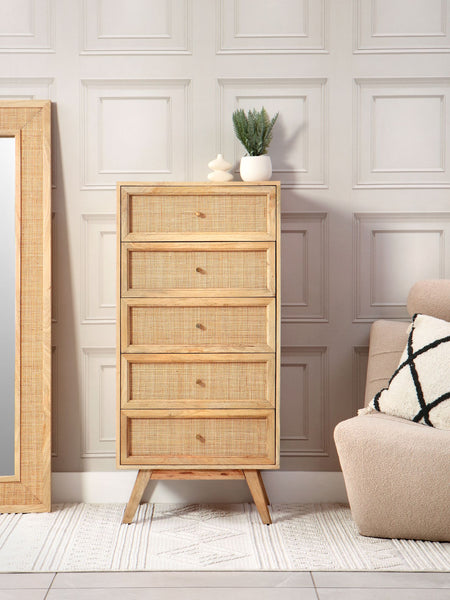
Natural materials are particularly helpful in larger rooms because they bring visual interest without excessive weight. Cane, rattan, timber, woven textiles and linen-like finishes soften clean architectural lines and prevent an extension of glass, plaster and stone from feeling cold. Their texture is enough to add character, even when the overall palette is restrained.
Select seating that suits light-filled spaces
Extended kitchens are often bright, warm rooms, especially when they face south or west. Upholstered seating brings comfort, but it needs to feel considered rather than overly formal. A relaxed armchair with a supportive cushion, or a compact two-seater positioned away from the main cooking route, can make the space inviting without turning it into a second lounge.
Natural rattan is especially at home in these settings. Its open weave allows light to travel through the room, while its organic form adds softness alongside contemporary cabinetry and large-format flooring. It has a presence that is warm and tactile, yet it does not visually crowd a room. With well-made cushions in a fabric that complements the kitchen, it becomes seating designed for lingering rather than merely looking the part.
For a room used daily, prioritise comfort as carefully as appearance. Sit in chairs where possible, consider arm height beside a dining table, and choose cushion covers that suit real family life. A lighter fabric can look wonderfully fresh, but a more forgiving neutral or softly patterned weave may be the wiser choice where children, pets and garden traffic are part of the picture.
Build warmth through layers, not clutter
Kitchen extensions benefit from a little softness. Hard surfaces are practical around cooking, but an entire room of cabinetry, tiles and glass can amplify sound and feel unfinished once evening arrives. Introduce texture through upholstered cushions, a woven rug, curtains or blinds, and a considered mix of timber and natural fibres.
Storage deserves equal attention. Open-plan rooms can become untidy quickly because they hold so many parts of family life. A sideboard, display cabinet or well-proportioned shelving unit gives everyday items a proper home while providing a place for a lamp, framed photographs or a vase of garden stems. This is where the extension begins to feel personal rather than newly built.
Be selective with accessories. A generous bowl on the dining table, a few books in the sitting area and one or two pieces of pottery will often achieve more than a crowded collection of small objects. In a spacious room, fewer, larger details tend to look more assured.
Plan the lighting for morning, afternoon and evening
A light-filled extension can still be poorly lit after sunset. Downlights are useful for working at the island or preparing food, but they are seldom enough on their own. Layer them with pendants over the dining table, wall lights or a floor lamp near seating, and a small table lamp on a sideboard.
This approach gives the room a different mood once the cooking is finished. It also means that every part of the extension does not have to be lit at once. A pool of warm light around the table can make a large kitchen feel wonderfully intimate on an autumn evening.
Where the room has expansive glazing, consider window treatments early rather than treating them as an afterthought. They bring softness, help manage glare and offer privacy after dark. The right fabric can also connect the colours used in cushions, dining chairs and adjoining living spaces.
Let the kitchen extension belong to the whole house
An extension should feel refreshed, but it should not feel disconnected from the rooms it joins. Carry a colour, timber tone or material through from the existing house so the transition feels natural. This might be as subtle as echoing the warmth of an oak hallway table in the dining furniture, or repeating a sage green from the sitting room in the cushion fabric.
That does not mean every piece must match. A considered mix is often more characterful, particularly in homes that have evolved over time. The key is consistency of mood: calm, welcoming and made for real use.
At Desser, a century of experience with furniture for light-filled living spaces has shown that the rooms people value most are rarely the most rigidly styled. They are the rooms with somewhere comfortable to sit, a table ready for company and materials that become more familiar with everyday life.
When furnishing an extension, allow the space to settle around your routines. Choose the pieces that make people want to stay for another cup of tea, another chapter or another hour at the table. That is when a kitchen extension becomes one of the most lived-in rooms in the house.