The success of orangery projects is rarely decided by the roof lantern or the choice of doors alone. It is decided on an ordinary afternoon: whether there is somewhere comfortable to settle with a book, enough surface space for a cup of tea, and furniture that makes a bright new room feel properly part of the home.
An orangery can be a generous, light-filled extension, a place for long lunches, family gatherings and quieter moments overlooking the garden. Furnishing it well means thinking beyond individual pieces and considering how the room will support the way you live, throughout the day and across the seasons.
Begin orangery projects with real life in mind
Before choosing a sofa, chair or dining table, decide what the room needs to do most often. A space designed chiefly for morning coffee and reading will need a different arrangement from one that hosts Sunday lunch for eight. Many orangeries do both, but it helps to identify the priority rather than asking every piece of furniture to perform every possible role.
Think about the room when it is busiest, not just when it is empty and newly finished. Where will people naturally enter from the house? Which doors open onto the garden? Is there a view worth preserving, or a low wall that offers the ideal place for a console table or occasional chair? These details guide the layout and prevent a beautiful room from becoming an obstacle course.
Plan for more than one moment of the day
Orangeries change character as the light moves. A sunny breakfast spot can feel very different after dusk, when it becomes an intimate setting for drinks or a relaxed evening meal. Create gentle zones rather than placing everything around the perimeter. A comfortable seating group can face the garden, while a dining table sits closer to the kitchen or a set of doors.
Leave room to move easily between these areas. As a useful starting point, allow enough clearance to pass behind seating without asking guests to turn sideways, and make sure doors can open fully. In a compact orangery, a smaller pair of armchairs and a round occasional table may feel far more generous than one oversized sofa.
Measure with cushions, not only frames, in mind
Scale is where many otherwise thoughtful schemes go astray. High ceilings and broad glazing can make furniture appear smaller than it would in a conventional sitting room, but that does not mean the answer is simply to buy the largest pieces available. Consider the visual weight of each item, its height against the glazing, and the footprint it occupies once cushions, side tables and circulation are included.
Marking out key pieces on the floor before ordering is worthwhile. It reveals whether a coffee table is too deep, whether dining chairs will pull out comfortably, and whether a favourite view is being blocked. Take measurements of doorways too, particularly where access is through the existing house.
Let the architecture guide the furniture
An orangery has more solidity than a fully glazed conservatory. Brick piers, plastered walls and a substantial roof structure provide useful visual anchors, giving you scope to introduce furniture with texture and character. The aim is not to compete with the architecture, but to soften it.
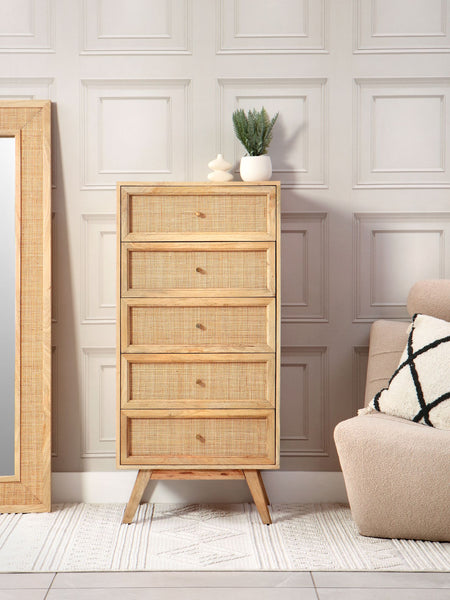
Natural materials are particularly at home here. The warmth of rattan, the grain of mango wood and the softness of woven textiles temper glass, stone and painted joinery. They create a room that feels connected to the garden without becoming overly themed or informal.
Natural rattan is especially well suited to light-filled spaces because it has presence without heaviness. Its open weave allows the eye to travel through a room, while its hand-finished character brings depth that smooth, uniform surfaces often lack. A rattan sofa and armchairs can form the heart of a relaxed seating area, then be layered with upholstered cushions in colours drawn from the garden, the flooring or the surrounding rooms.
Choose a palette that will settle in
There is no need for an orangery to be entirely neutral, though quiet foundations tend to age well. Warm stone, soft green, oat, clay and muted blue work beautifully with timber, plants and changing natural light. If the room opens onto a lush garden, deeper botanical tones can create a pleasing sense of continuity. If it faces a pale terrace or coastal view, softer linen shades may feel more appropriate.
Use pattern carefully. A pair of patterned cushions, a textured throw or an upholstered occasional chair can add personality without making the room feel busy. The architecture already supplies lines, reflections and visual interest, so the furnishings benefit from a calmer hand.
Make comfort the centre of the room
A room can look polished on installation day and still go unused if it is not genuinely comfortable. Seat depth, back support and cushion filling matter, particularly if the orangery will become the household's preferred place to spend a weekend afternoon.
Try to include a mix of seating positions. A sofa invites people to relax together; an armchair offers a more private retreat; a footstool can serve as an extra perch when friends arrive. Side tables should be close enough to be useful, rather than decorative objects placed just beyond reach. A well-positioned floor or table lamp also matters once daylight fades, even in a room blessed with generous glazing.
For family homes, favour forgiving fabrics and arrangements that do not require constant tidying. For a quieter home, a more tailored layout with occasional seating and a statement table may be exactly right. There is no universal formula. The best choice depends on who uses the room and how much daily life it needs to accommodate.
Give every zone a reason to be there
Larger orangery projects often benefit from distinct but connected areas. The key is to make each one purposeful. A dining table should have enough room for chairs and serving dishes. A reading corner needs good light, a small table and a chair with the right level of support. A sociable seating area needs a focal point, whether that is the garden, a fireplace, a view or simply the people gathered within it.
Rugs are useful for defining a sitting area, especially where hard flooring runs throughout the extension. Choose a size large enough for at least the front legs of the main seating to sit on it. A small rug floating in the middle of a generous room can make the furniture seem disconnected.
Storage deserves consideration too. A handsome sideboard, cabinet or console gives the room a practical home for table linen, games, glassware and the everyday items that otherwise accumulate on a dining table. It also offers an opportunity to bring in the richer tone of wood or display a considered collection of ceramics and books.
Respect light, warmth and changing conditions
The pleasure of an orangery comes partly from its relationship with the outdoors, but this also means conditions can shift quickly. Direct sun, cooler evenings and the warmth generated by cooking or entertaining all affect how a room feels. Consider blinds, curtains or shading early in the project, rather than treating them as an afterthought.
Position delicate textiles and artwork thoughtfully where sunlight is strongest. Choose cushions with removable covers where possible, and rotate them occasionally so the room wears evenly. Natural furniture rewards ordinary care: regular dusting, prompt attention to spills and avoiding prolonged exposure to excessive heat will help it retain its beauty.
Plants add softness and reinforce the connection with the garden, but they should complement the furniture rather than crowd it. One substantial leafy plant in a well-chosen pot can have more effect than numerous small pots scattered across every surface.
A considered finish lasts longer than a quick one
It is tempting to furnish an extension quickly once the building work is complete. Yet leaving space for a few weeks can be revealing. You may notice where the afternoon sun lands, which route everyone takes to the garden, or the corner that calls for a chair rather than another plant.
Invest first in the pieces that shape everyday comfort: seating, a table of the right scale and lighting that makes the room welcoming after dark. Add smaller accents gradually. This approach gives the room time to develop a sense of ease rather than looking assembled in a single afternoon.
For more than a century, Desser has made furniture for rooms where natural light, comfort and craft belong together. In an orangery, the most satisfying choices are those that feel settled from the start, then become more familiar and more loved with every season spent there.