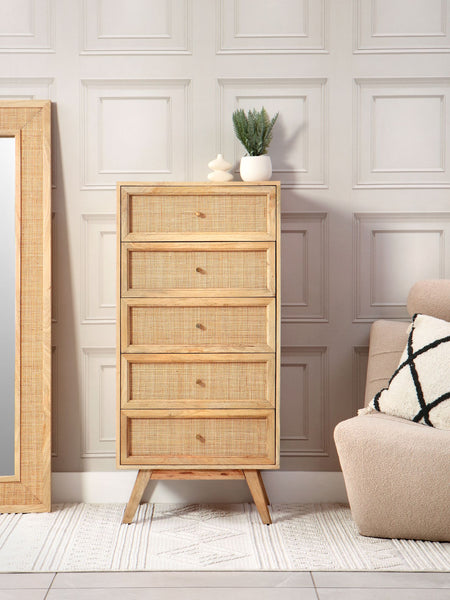
A mango wood table changes with the daylight. Morning sun brings out honeyed tones and fine grain; by evening, its darker markings give a dining space or garden room a more settled, grounded feel. This mango wood guide is for homeowners choosing furniture with warmth, character and an honest connection to the natural world.
Mango wood is not uniform, and that is precisely its appeal. Each piece carries its own variation in colour, figuring and texture, making it especially at home in the relaxed, light-filled spaces where family life, entertaining and quiet moments all happen side by side.
What makes mango wood distinctive?
Mango trees are best known for their fruit, but once a tree has reached the end of its productive life, its timber can be put to practical, lasting use. This gives mango wood a considered place in furniture making: it makes use of a natural resource that would otherwise be overlooked, while producing timber with a notably warm and expressive finish.
The colour can range from pale golden brown to deeper caramel, often with dark streaks or soft grey undertones. Grain patterns vary from board to board, so a large sideboard, coffee table or dining table has visual movement without needing elaborate decoration. If you favour interiors that feel collected rather than overly matched, mango wood offers that sense of individuality naturally.
It is a hardwood, generally dense enough for well-made everyday furniture. That does not mean every mango wood piece is made to the same standard. The quality of the joinery, the thickness of the timber, the construction of drawers and the protective finish all matter as much as the species itself.
A mango wood guide to choosing the right piece
Start with the room rather than a single item. Mango wood has enough presence to anchor a space, particularly in an orangery, open-plan kitchen or garden room where surfaces can otherwise feel hard and bright. A substantial dining table can bring warmth to glazed architecture, while a low cabinet or occasional table helps a softer seating area feel complete.
Consider scale carefully. The richness of the grain means a large mango wood sideboard can become a focal point, which is ideal against a simple wall or beside neutral upholstery. In a smaller conservatory or snug, a lighter-framed table or compact storage piece may be the better choice. Leave enough room to move around it comfortably, especially where doors open onto the garden or the room is used for entertaining.
The finish deserves close attention. A matte or gently distressed surface suits homes with a relaxed, lived-in character and tends to disguise minor marks well. A smoother sealed finish may be preferable around dining areas, where spills are more likely. Neither is automatically better. The right choice depends on whether you want the surface to develop a little patina over time or retain a more even appearance.
When viewing furniture, look beyond the top surface. Open drawers, check that doors sit squarely and notice whether the handles, legs and internal fittings feel proportionate to the piece. Solid wood may move subtly as seasons change, but careful construction allows for this and is a sign of furniture designed for long-term use.
The beauty of variation
It is worth expecting variation rather than treating it as a flaw. The sample seen online or in a showroom is an indication of the overall character, not a promise that every knot, shade and grain line will be repeated exactly. This is part of choosing real timber.
For some interiors, consistency matters more. If you are furnishing a very formal scheme, or matching existing dark cabinetry, a stained or more uniform wood finish may be easier to coordinate. Mango wood is at its best when its natural differences are allowed to show.
Where mango wood works best at home
Mango wood is remarkably adaptable, but it is particularly effective in rooms that benefit from a little visual warmth. In an extended kitchen, it balances painted cabinetry, stone worktops and large areas of glass. In a garden room, it complements woven natural materials, linen-look fabrics and leafy planting without making the room feel themed.
It also sits comfortably alongside natural rattan and cane. The two materials share an ease that suits rooms designed for slower mornings, weekend lunches and evenings when the doors are open to the garden. The key is to vary the scale and finish: let a timber table provide structure, then bring in lighter woven seating, cushions and softer textiles for comfort.
For a more contemporary setting, pair mango wood with simple upholstery in chalk, oatmeal, olive or charcoal. Black metal lighting or hardware can sharpen the look, while aged brass brings a warmer, more traditional note. There is no need to match every wood tone in the room. A gentle mix of timber finishes often feels more natural than a perfectly coordinated set.
Caring for mango wood furniture
Mango wood is straightforward to live with, provided it is treated as natural timber rather than an indestructible surface. A soft, dry cloth is usually enough for everyday dusting. For a small spill, wipe it promptly with a lightly damp cloth and dry the area afterwards. Avoid harsh sprays, abrasive pads and saturated cleaning cloths, which can dull or damage the finish.
Use coasters beneath drinks, mats under hot serving dishes and felt pads beneath lamps, vases and decorative objects. These small habits prevent rings, scratches and concentrated heat marks, particularly on dining and coffee tables that see daily use.
Try to position mango wood furniture away from radiators, wood burners and intense, prolonged direct sun. Central heating can dry timber, while strong changes in temperature and humidity may encourage movement over time. In bright garden rooms, blinds, curtains or filtered window coverings can be useful during the hottest part of the day.
If a piece is placed near an exterior door, take a little extra care during wet weather. Muddy shoes, damp coats and open windows are part of a well-used home, but standing water should never be left on a timber surface. A stable indoor environment will help the wood remain at its best.
Can mango wood be repaired?
Minor surface marks are often less alarming than they first appear. Many become less noticeable as the timber develops a natural patina. For a deeper scratch or a damaged finish, seek advice based on the specific finish used on the furniture before applying oils, waxes or repair products. An unsuitable treatment can alter the colour or leave a patchy sheen.
This is one of the quiet advantages of real wood: it can often be refreshed rather than simply replaced. With sensible care, a well-made piece can continue to earn its place in the home through changing décor, family meals and many years of daily living.
Is mango wood a sustainable choice?
Sustainability depends on more than the name of a material. Responsible sourcing, efficient use of timber, durable construction and the expected lifespan of the finished furniture all deserve consideration. Mango wood can be a positive choice because it makes use of trees once their fruiting years are over, rather than relying solely on timber grown for furniture production.
The more useful question is whether you will value the piece for a long time. A table chosen for its solid construction, practical proportions and enduring character is less likely to be replaced when fashions shift. That is a more thoughtful approach to furnishing a home than chasing a short-lived look.
At Desser, the emphasis has always been on natural materials that make a room feel welcoming and lived in. Mango wood brings a different kind of texture to that story: weight, grain and a warmth that settles beautifully into spaces made for everyday comfort.
Choose the piece that suits how your room is actually used, allow its markings to be individual, and give it the modest care natural timber asks for. It will reward you by looking more at home with every passing season.